AFROSCOPE (Isaac Nana Opoku) is a multidisciplinary artist, designer, and creative technologist from Ghana.

Their work explores connection—to self, history, nature, and speculative worlds. Moving across visual art, digital media, performance, and research, their practice blends African cosmologies, speculative thinking, and contemporary technologies to create meditative, thought-provoking experiences.

AFROSCOPE represented Ghana at the 2022 Venice Biennale, has received numerous grants from reputable institutions, has shown work in museums worldwide, and has been published in several art publications.


Email
CV
Instagram
Spinning Stories  — Living Archive

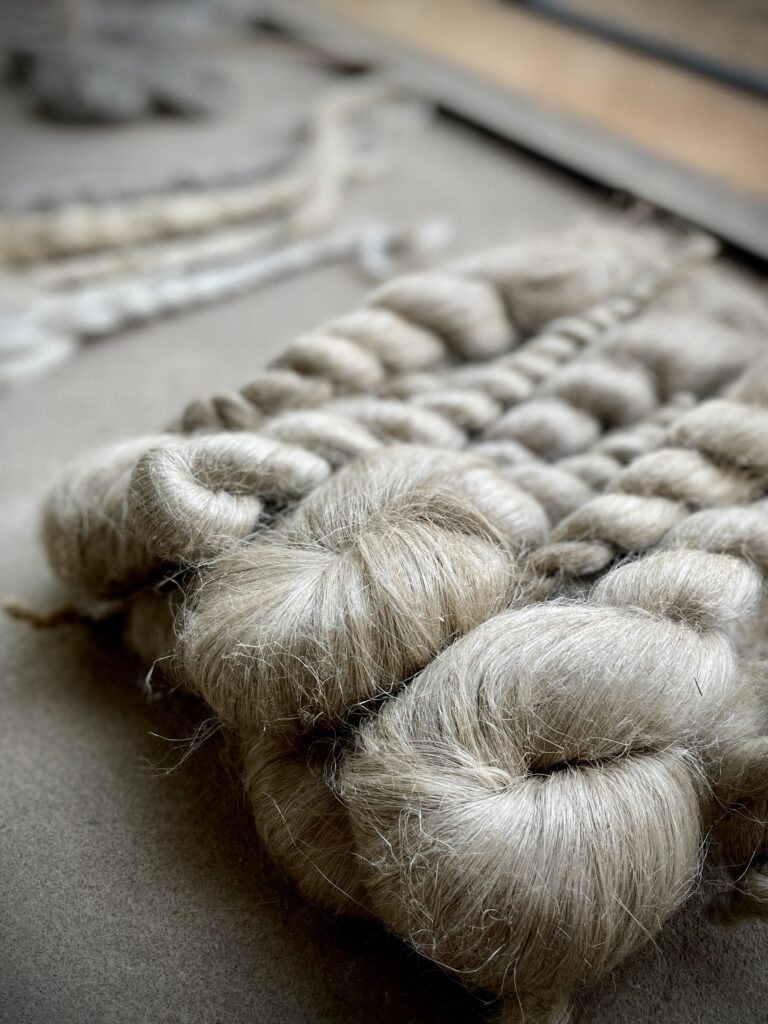
Spinning Stories: Living Archives was an artistic research project I developed in collaboration with textile artist and researcher Dr. Karin Altmann of the University of Applied Arts Vienna. The project explored spinning traditions in Ghana and Austria, and how knowledge held in fibres, tools, gestures and personal stories can be documented and carried forward.

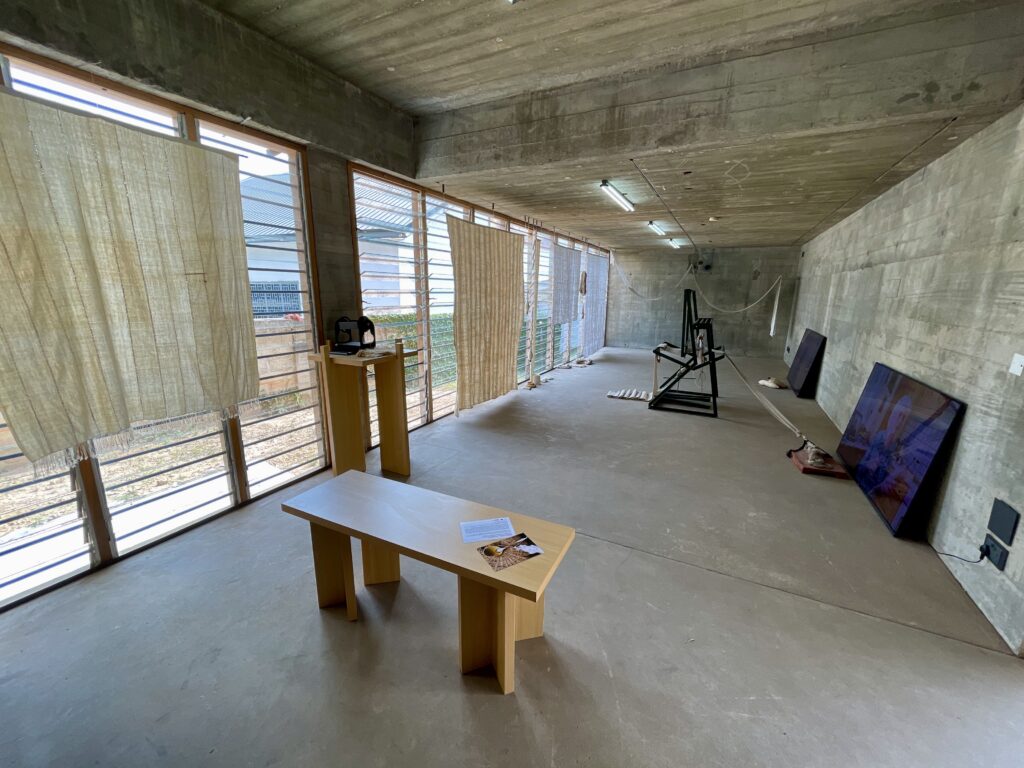
Spinning Stories exhibition at Nubuke Foundation
Spinning Stories at Nubuke Foundation, Accra.

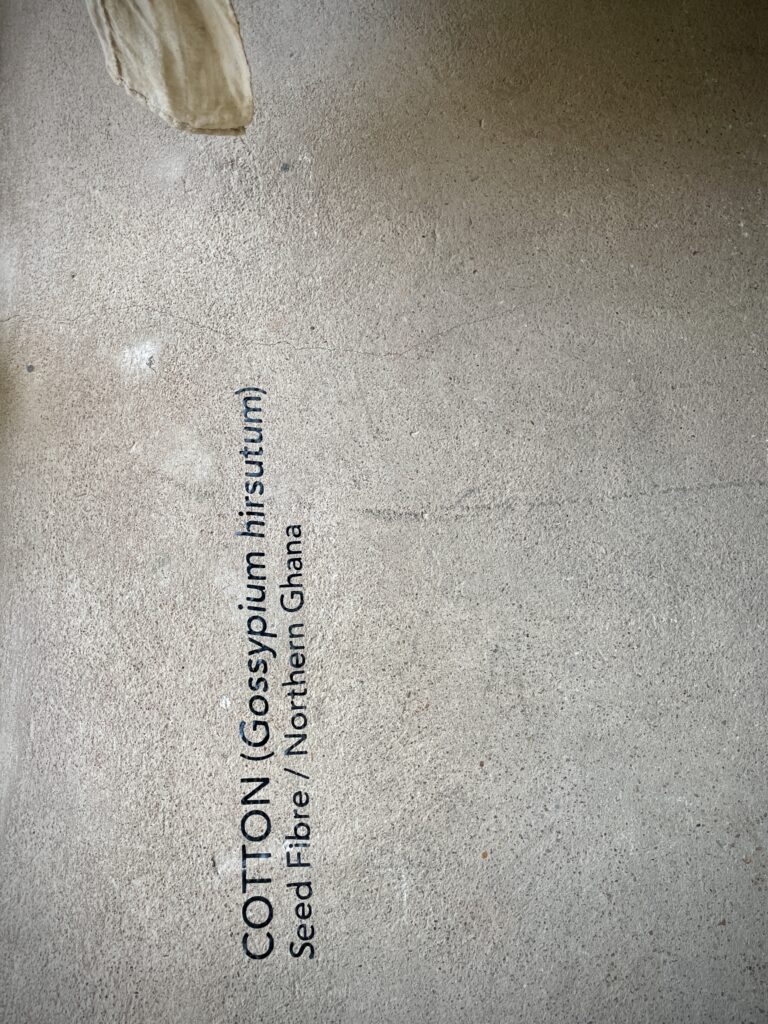
The research grew from an encounter I had in Sognayili, northern Ghana, in 2020, where I observed women spinning locally grown cotton by hand. Further visits to Daboya, Loho and the Woori Festival helped us understand how much knowledge surrounds this practice—and how quickly some of it is disappearing as older practitioners pass away and younger generations move away from spinning.

From November 2024 to March 2026, Karin and I conducted research across Ghana and Austria with support from the University of Applied Arts Vienna’s INTRA programme. In Ghana, we travelled through communities including Aburi, Mampong, Tamale, Savelugu, Moya, Gumo and Wa. We interviewed spinners, cotton farmers, weavers, artists and cultural workers, documenting the processes, memories and wider ecological and economic conditions connected to local cotton production.

The research was shaped by the people we encountered along the way. These included Mariam, one of the last remaining hand-spinners in Wa, and Karimo Mahama, whose knowledge helped guide our understanding of spinning and textile production in northern Ghana; Walisu Alhassan and Kofi Setordji; and the women spinners and cotton farmers who welcomed us into their communities and shared knowledge rarely captured in formal records. In Austria, our exchanges with Berta Thaller and Franz connected the project to personal memories of flax cultivation, processing and spinning. Conversations with artists and researchers including Sela Adjei, Anita Hosseini and Liddy Scheffknecht also helped us consider the project’s wider artistic, historical and technological questions.

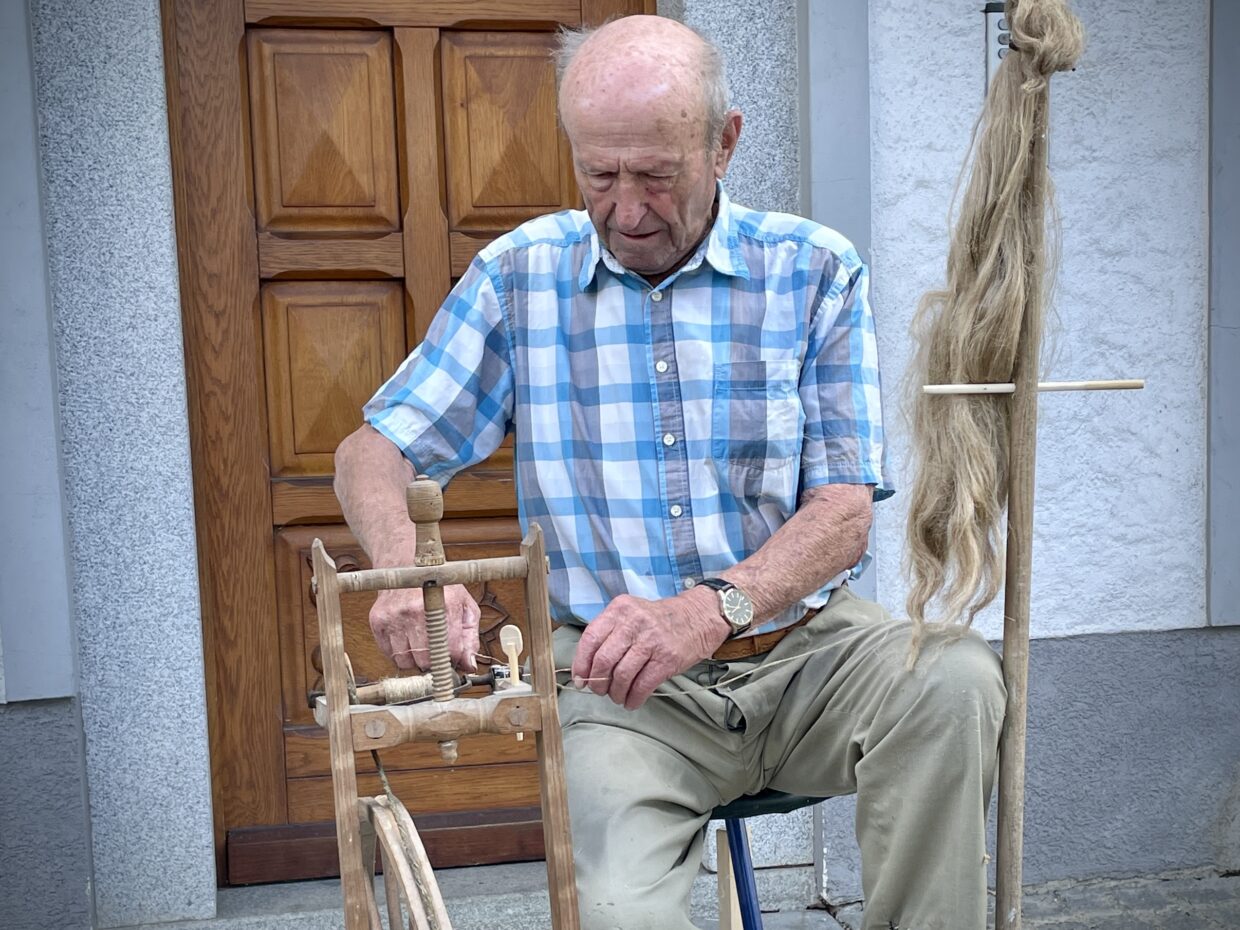
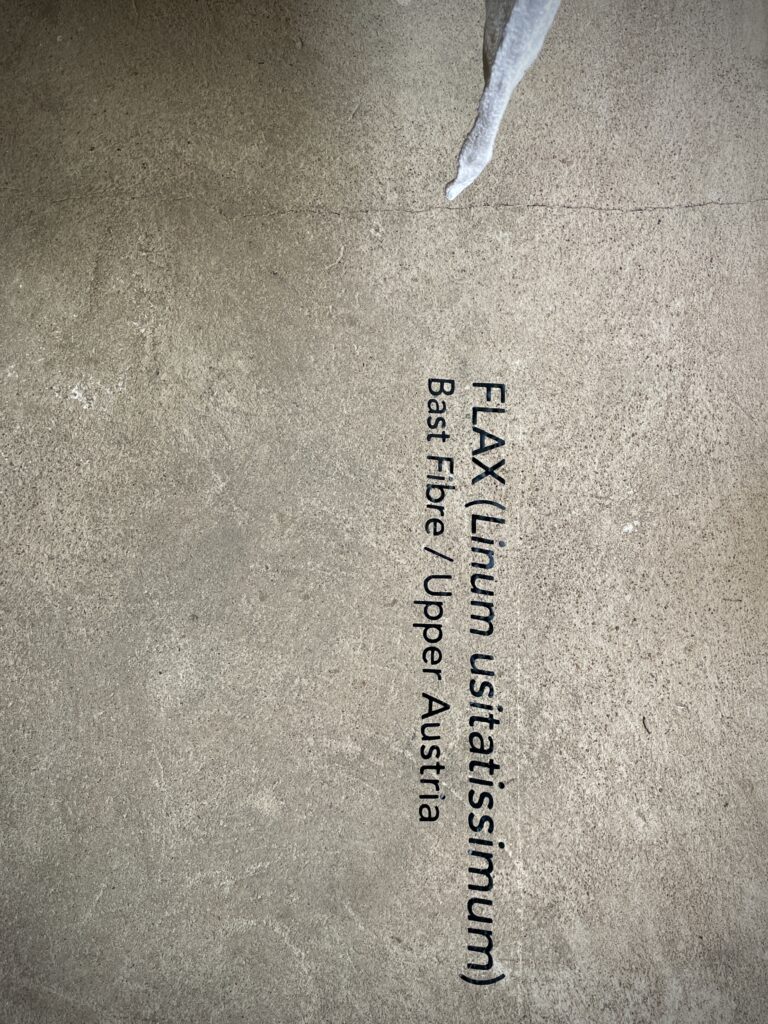
The Austrian strand followed related histories of flax and nettle cultivation, fibre processing and spinning. Through interviews, field visits and material experiments, we looked at how industrialisation and social change have affected textile knowledge in both places. The intention was not to present Ghana and Austria as equivalent, but to create a conversation between two distinct contexts in which once-common practices have become increasingly rare.

Flax spinning demonstration in NiederkappelFlax spinning research in Upper Austria
Flax spinning demonstration in Niederkappel, Upper Austria.

Throughout the project, we treated the body as a form of archive. Much of the knowledge involved in spinning is not written down. It is held in movement, repetition, touch and memory, and passed between people through observation and practice. This connected directly to my broader interest in textiles as records of history and culture, particularly within societies whose systems of knowledge have not always been recognised by conventional Western archives.

Most importantly, the project became about much more than attempting to “preserve a disappearing craft.” It was about women’s largely unrecognised labour; the body as an archive; storytelling as knowledge production; the ecological systems behind cloth; the fragility of oral transmission; the politics of who and what enters an archive; and the possibility of carrying ancestral knowledge into contemporary art and technological futures without extracting it from its human relationships.

The research took several public forms, including interviews, films, workshops, talks, installations and material experiments. We presented aspects of the work at the Woori Festival, the Angewandte Research Days, Ars Electronica and through the European Textile Network. Our installation In/Tangible, first presented at Woori Festival in 2025, used hand spindles from northern Ghana to draw attention to the women, labour and knowledge connected to these objects.

The project concluded with an exhibition at Nubuke Foundation in Accra from 26 February to 28 March 2026. It brought together filmed interviews from Ghana and Austria, spinning tools, fibres, yarn, woven materials, machinery and installations developed during the research, allowing audiences to encounter both the people involved and the physical materials we had been investigating.

Spinning Stories exhibition viewSpinning Stories exhibition viewSpinning Stories exhibition detail

The exhibition also had additional significance as the inaugural exhibition of the Austrian Embassy’s Cultural Forum in Ghana. Its opening was attended by approximately 250 guests, including Ghana’s Deputy Minister of Tourism, Culture and Creative Arts, Yussif Issakah Jajah; Austrian State Secretary Sepp Schellhorn; Section Head Regina Rusz; and a delegation of cultural and scientific representatives from Austria. This was followed by a strategic Ghana–Austria cultural roundtable focused on building more sustained and mutually beneficial relationships between the two countries’ cultural sectors.

For me, Spinning Stories was ultimately a way of recognising the people whose knowledge has sustained textile traditions, questioning what we consider an archive, and exploring how these practices might remain active rather than survive only as records of the past.

Explore the complete Spinning Stories research journey, interviews and project archive.


DECOLONIZE IMAGINATION ™  ☥  Copyright © 2026 AFROSCOPE ™